Suitcase Organization Guide for Smarter Packing

You feel the difference before you even leave for the airport. A suitcase that closes without a fight, outfits that stay where you put them, and no frantic digging for a charger at the hotel. That is the point of a good suitcase organization guide - not just fitting more in, but making travel feel lighter, cleaner, and more controlled.
Most packing advice starts with folding methods. That matters, but organization starts earlier, with decisions. What earns space in your bag? What needs fast access? What should stay sealed, separated, or compressed? When those choices are clear, the suitcase stops being a catch-all and starts working like a system.
A suitcase organization guide starts with zones
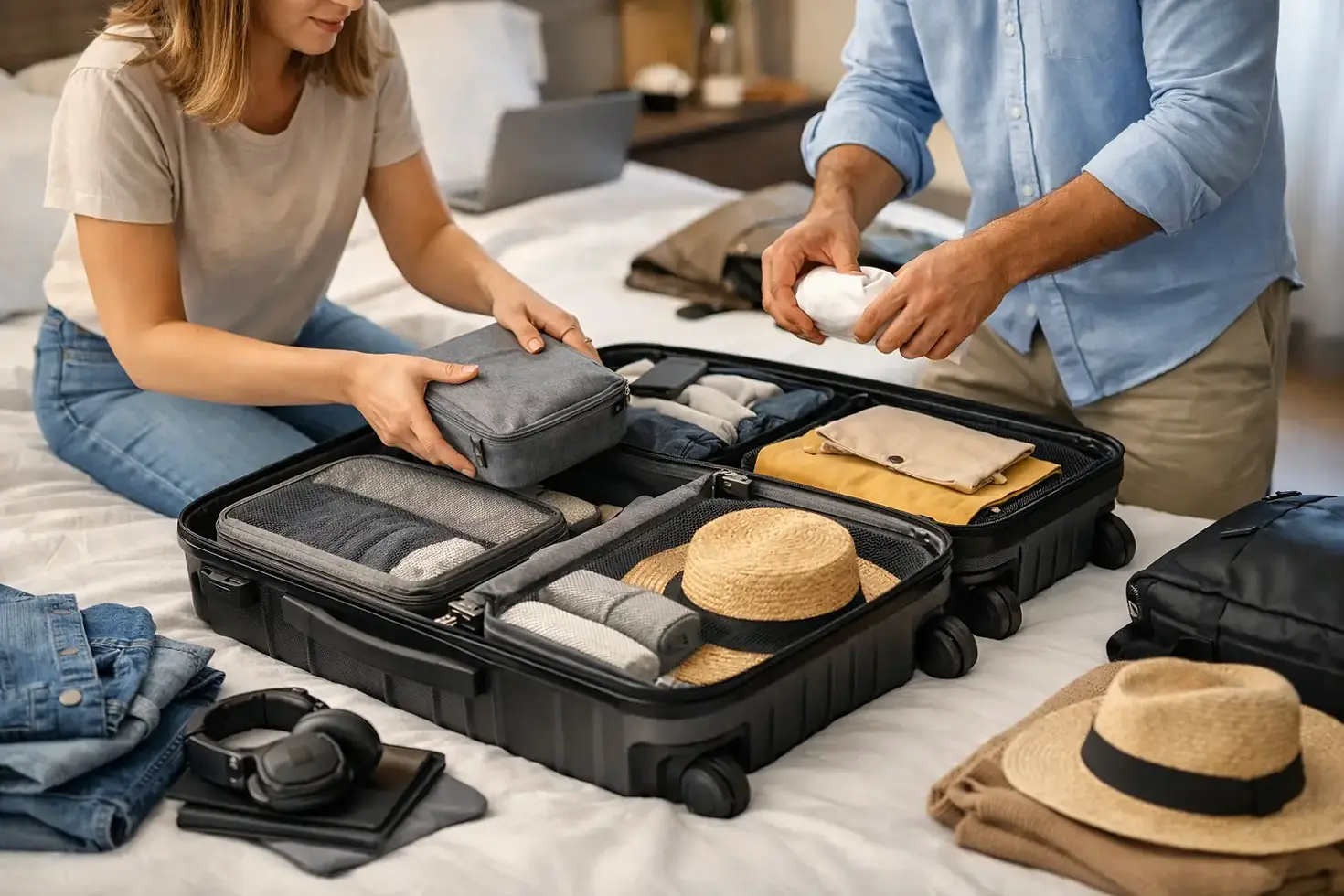
The easiest way to organize a suitcase is to stop thinking of it as one big compartment. Treat it like a series of zones with a job. Your base layer is for the bulkiest or least-needed items during transit, your middle layer is for core clothing, and your top layer is for pieces you may want first when you arrive.
Shoes usually belong at the bottom or along the edges, where their structure helps frame the bag. Clothing goes in the center, and smaller accessories fit into corners or dedicated pouches. Toiletries should be isolated, not floating loose next to a sweater you plan to wear to dinner.
This sounds simple, but it solves the most common packing problem: random stacking. Random stacking wastes space because soft items collapse unevenly, hard items shift, and suddenly half your suitcase is taken up by air gaps.
Pack for access, not just capacity
A packed suitcase can look neat and still be annoying to use. The real test is what happens on the road. If you have to unpack half the bag to find your sleepwear, organization failed.
Start by separating your trip into use frequency. The items you need first should sit near the top or in exterior compartments if your suitcase has them. Think arrival outfit, chargers, medication, and anything tied to airport security or a quick freshen-up. Items you will not touch until day three can sit deeper.
Business travel and vacation travel create different access patterns. For a work trip, your first-access items might be a blazer, laptop accessories, and grooming essentials. For a resort stay, it may be sandals, swimwear, and sunscreen. The right layout depends on the trip, which is why rigid packing rules only get you so far.
Clothing organization is where most space is won
The biggest gains usually come from how you handle clothes. Rolling works well for casualwear, knitwear, and pieces that do not wrinkle easily. Folding is often better for structured garments like button-downs, blazers, and dress pants. A mixed approach is usually smarter than committing to one method.
Compression can change the equation, especially for travelers trying to stay carry-on only. Bulky layers, soft basics, and extra outfits for longer trips can take over a suitcase fast. Compressing those items creates cleaner volume and frees space for shoes, toiletries, or a second look for evening plans.
There is a trade-off, though. Compression saves space, but it should be used with intention. Delicate fabrics and sharply tailored pieces may do better with a gentler fold and dedicated placement. The goal is not to flatten everything. The goal is elegant logic in your suitcase.
The smartest suitcase layout for a weeklong trip
For a typical five-to-seven-day trip, a balanced layout tends to work best. Put shoes at the base in separate bags or sleeves, with soles facing outward. Place compressed casual clothing or bulkier pieces in the center. Layer flatter folded items on top, then tuck underwear, socks, and smaller accessories into the remaining gaps.
Your toiletry kit should sit in a stable corner or on top, depending on when you expect to use it. Electronics deserve their own pouch, not loose placement between clothes. Cords wrapped around random items create clutter fast and are one of the easiest ways to make a well-packed suitcase feel messy by day two.
If you are packing for mixed climates, dedicate one section to weather-specific gear instead of scattering it through the bag. One sweater in one corner, a rain shell in another, and gloves tucked somewhere else may look efficient at home, but it creates friction when you actually need them.
Use compression as an organizing tool, not just a space hack
This is where many travelers miss an opportunity. Compression is often treated as a last-minute fix for overpacking, when it works better as part of the initial plan. If you know which clothing categories tend to expand - T-shirts, activewear, sweaters, sleepwear - compress those first and build the suitcase around them.
A cordless compression setup is especially useful for travelers who want flexibility without adding another awkward device to the packing list. It lets you reduce volume cleanly, keep garments protected from moisture and odors, and maintain a more refined system from departure to return trip. That is very different from stuffing clothes down by force and hoping the zipper survives.
TRIPUM approaches this well because the kit is designed for actual travel rhythm, not just storage. A compact, rechargeable pump and purpose-built packing components make compression feel less like a workaround and more like part of a polished routine.
Small items create most of the clutter
Ask frequent travelers what makes a suitcase feel chaotic, and it usually is not jeans or jackets. It is the small stuff. Chargers, jewelry, socks, travel documents, beauty items, and laundry all multiply quickly if they are not assigned a home.
This is where pouches earn their keep. Not because more containers automatically mean better organization, but because grouping related items reduces visual noise and decision fatigue. One pouch for tech, one for grooming, one for in-transit essentials, and one for laundry is often enough.
Try to avoid overcompartmentalizing. If every tiny item has its own bag, you create a different kind of friction. Good organization should make packing faster and unpacking obvious.
Your return trip needs a plan too
A practical suitcase organization guide should account for the trip home, because that is where most neat packing systems fall apart. Worn clothes mingle with clean ones, souvenirs appear, and suddenly your carefully arranged bag turns into a rushed compression experiment on the hotel bed.
Leave a little unclaimed space from the start if you know you shop while traveling. Bring a dedicated section or pouch for laundry. If a trip includes beachwear, gym clothes, or rainy conditions, separating used items matters even more. It keeps the rest of your bag fresher and saves time when you get home.
This is also why modular packing beats perfect folding. A suitcase that can adapt on the return leg is more useful than one that looked immaculate only once.
Common suitcase mistakes that waste space
Overpacking is the obvious one, but not the only one. Travelers also waste space by packing duplicates without a purpose, filling every gap too early, and placing heavy items in unstable positions. A bag packed to the brim from the beginning leaves no room for adjustment.
Another mistake is organizing by category when the trip calls for organizing by outfit. If you are traveling for events, work meetings, or a tightly scheduled itinerary, outfit-based packing can be more efficient than stacking all shirts together and all pants together. On a looser vacation, category-based packing may be simpler.
It depends on how you travel. A suitcase should match your pace, not someone else’s packing video.
Make your suitcase easier to live out of
The best organized suitcase is not just efficient to pack. It is easy to maintain. That means items go back into roughly the same place after use, fresh clothes stay distinct from worn ones, and your essentials remain easy to reach throughout the trip.
If you tend to live out of your suitcase rather than unpack into hotel drawers, visibility matters even more. Keep daily-use items on top, reserve one side for clean clothing, and avoid stacking too many overlapping layers. The more often you disturb the whole suitcase to access one item, the faster order disappears.
A well-organized bag creates a calmer trip because it reduces tiny decisions. What do I wear? Where is my charger? Did my clean shirt end up next to wet swimwear? Those little moments add up.
Packing well is not about squeezing your entire closet into a carry-on. It is about creating a system that supports the way you move. When your suitcase has structure, travel feels less crowded, less messy, and far more intentional. That is the kind of organization you notice every step of the trip.


Comments