What Clothes Pack Best in Vacuum Bags for Travel?

A puffer jacket can take up the same suitcase space as three days of outfits. That is exactly where vacuum compression earns its place. But knowing what clothes pack best in vacuum bags is the difference between a calm, organized carry-on and a wrinkled pile that needs attention the moment you arrive.
The best candidates are soft, bulky, resilient pieces that rebound easily after release. Think sweaters, activewear, cotton basics, and outerwear. Structured garments, delicate fabrics, and anything you need looking pressed straight from your suitcase deserve a different approach.
What clothes pack best in vacuum bags?
Vacuum bags perform best with clothing that contains plenty of trapped air. When air is removed, the fabric compresses dramatically without requiring you to fold, sit on, or force your suitcase closed.
Bulky layers and cold-weather clothing
Sweatshirts, fleece pullovers, knit sweaters, puffer vests, and insulated jackets are ideal. These items consume a surprising amount of room because their loft is designed to hold air. Compression turns that volume into a flatter, more manageable layer.
For a winter city break or ski weekend, this is often the highest-value use of a vacuum bag. Pack the pieces you will not need until arrival, then keep your airport layer accessible outside the compressed group. A jacket that has been tightly packed may need a little time to regain its full shape, so avoid compressing the one you plan to wear immediately.
Casual cotton essentials
T-shirts, long-sleeve tees, leggings, pajama sets, lounge pants, cotton shorts, and casual dresses pack beautifully. They are flexible, easy to fold, and generally forgiving of light creasing. Better still, organizing them by outfit category before sealing makes unpacking faster.
A useful rule: reserve one bag for the clothes you will wear most often, and another for lower-priority layers or backup outfits. This keeps your suitcase from becoming a compressed guessing game when you need one shirt on day three.
Activewear and swimwear
Performance shirts, yoga pants, running shorts, sports bras, rash guards, and swimsuits are excellent choices. Their lightweight technical fabrics may not add much weight, but they can take up more volume than expected when packed loosely.
For beach trips and active itineraries, compression makes it easier to bring a second workout set or an extra swimsuit without sacrificing space for the rest of your wardrobe. Make sure every item is fully dry before packing. Compression can protect clean clothing from moisture and odors in transit, but it should never seal in dampness.
Denim, chinos, and casual trousers
Jeans and casual pants respond well to vacuum packing, especially when traveling for a week or longer. They are dense rather than fluffy, so the space savings will be less dramatic than with a sweater or puffer. Still, combining several pairs in one bag can create a neat, flat unit that sits efficiently at the base of a suitcase.
If you are packing dark denim or heavier trousers, place them toward the bottom after compression. They provide a stable foundation for lighter, more crease-prone items packed above.
Clothes to pack carefully, or not compress at all
Compression is a tool, not a universal rule. A polished packing system protects the clothes you bring, not just the space they occupy.
Tailored blazers, suit jackets, dress shirts, pleated skirts, and formal dresses are better packed with minimal folding. Their shape, seams, and crisp finishes can develop stubborn creases under prolonged pressure. If you need these pieces to look presentation-ready, use a garment folder or lay them flat across the top of your suitcase instead.
Silk, satin, linen, leather, suede, and garments with elaborate embellishment also deserve caution. Fine fabrics can wrinkle deeply, and beads, sequins, or delicate trims may be stressed when packed under compression. The same goes for structured bras, hats, and shoes. Their shape matters more than the space they save.
Wool sits in the middle. Soft merino base layers and casual wool sweaters can usually handle a short trip in a vacuum bag, particularly if they are folded gently and released soon after arrival. A premium wool blazer or a sharply tailored piece should stay out.
The best way to fold before compression
A vacuum bag cannot make a careless packing job elegant. Folding well before removing air helps clothing stay smooth, makes the bag easier to arrange, and prevents one oversized bundle from dominating your suitcase.
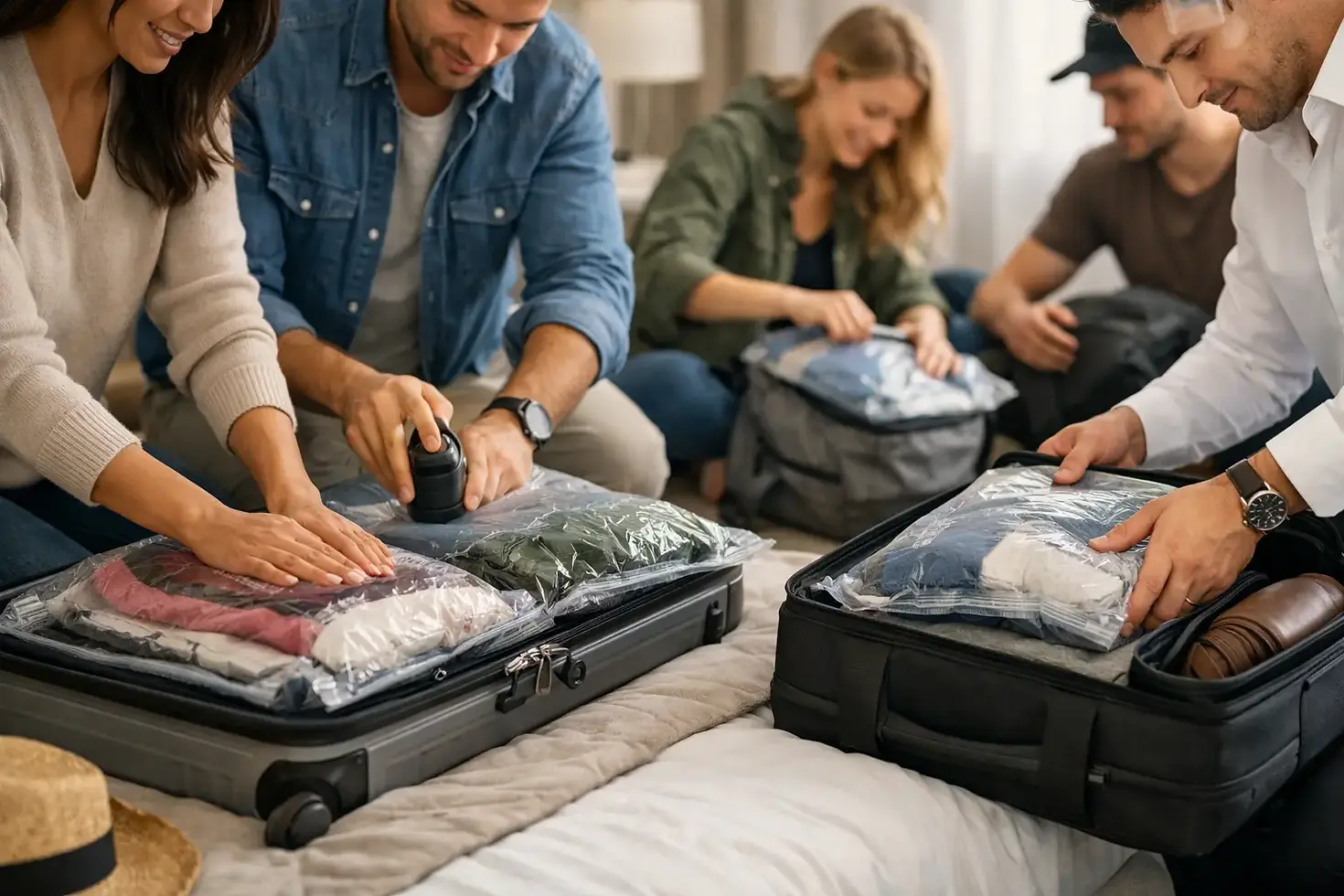
Start with clean, completely dry garments. Smooth each piece with your hands, then make simple, wide folds rather than tight rolls. Rolling can create ridges that remain visible on soft fabrics after compression. Stack similar items together, keeping bulky pieces near the center and lighter pieces toward the outside.
Do not fill the bag to its limit. Leave enough room at the closure so it can seal cleanly, and enough flexibility for the compressed bag to lie flat. Overpacking makes it harder to create an even seal and can turn a useful packing tool into an awkward block.
Once sealed, use a cordless pump to remove air steadily rather than aggressively forcing the bag into its smallest possible shape. The goal is efficient volume, not a rigid slab. A flatter, flexible bag is easier to position around suitcase wheels, handles, and corners.
Think in suitcase zones, not individual items
The smartest way to use vacuum bags is to design the suitcase as a system. Compression creates room, but placement is what makes that room useful.
Put compressed casual clothing in the main compartment first, ideally in broad layers. Use the remaining spaces for shoes, toiletries, chargers, and the items you will need during the first 24 hours. If your bag includes a divider, keep your arrival outfit separate so you do not have to open everything at the hotel.
For carry-on travelers, this approach can make a meaningful difference. A few compressed sweaters or activewear sets may free enough room to avoid checking luggage altogether. Just remember that vacuum packing reduces volume, not weight. A bag packed with multiple pairs of jeans can still exceed an airline's weight limit, even when it looks beautifully streamlined.
Match compression to your trip
The right clothing mix depends on where you are going and how you plan to travel. A warm-weather trip benefits most from compressing swimwear, casual sets, and extra layers for cool evenings. A cold-weather itinerary gives you the biggest payoff from outerwear, fleece, and sweaters.
Business travelers should be more selective. Compress off-duty clothes, gym gear, and casual evening basics, while keeping meeting attire outside the bag. That split gives you the space-saving advantage without compromising the polished pieces that need to look sharp.
For families or longer trips, consider packing by person or by activity. One bag for kids' soft layers, one for workout and pool gear, or one for laundry-ready clothing can bring order to a suitcase that would otherwise unravel by the second stop.
A better packing ritual for every departure
The Tripum Duo Kit is designed for this exact rhythm: fold, seal, compress, and place. Its cordless, USB-rechargeable pump removes the friction of manual compression, while the 18L bags create a clean, organized format for travel wardrobes that tend to expand before every departure.
Use compression for the clothes that benefit from it, protect the pieces that need structure, and leave a little space for the unexpected find you bring home. Your suitcase should feel less like a compromise and more like a considered part of the trip.


Comments