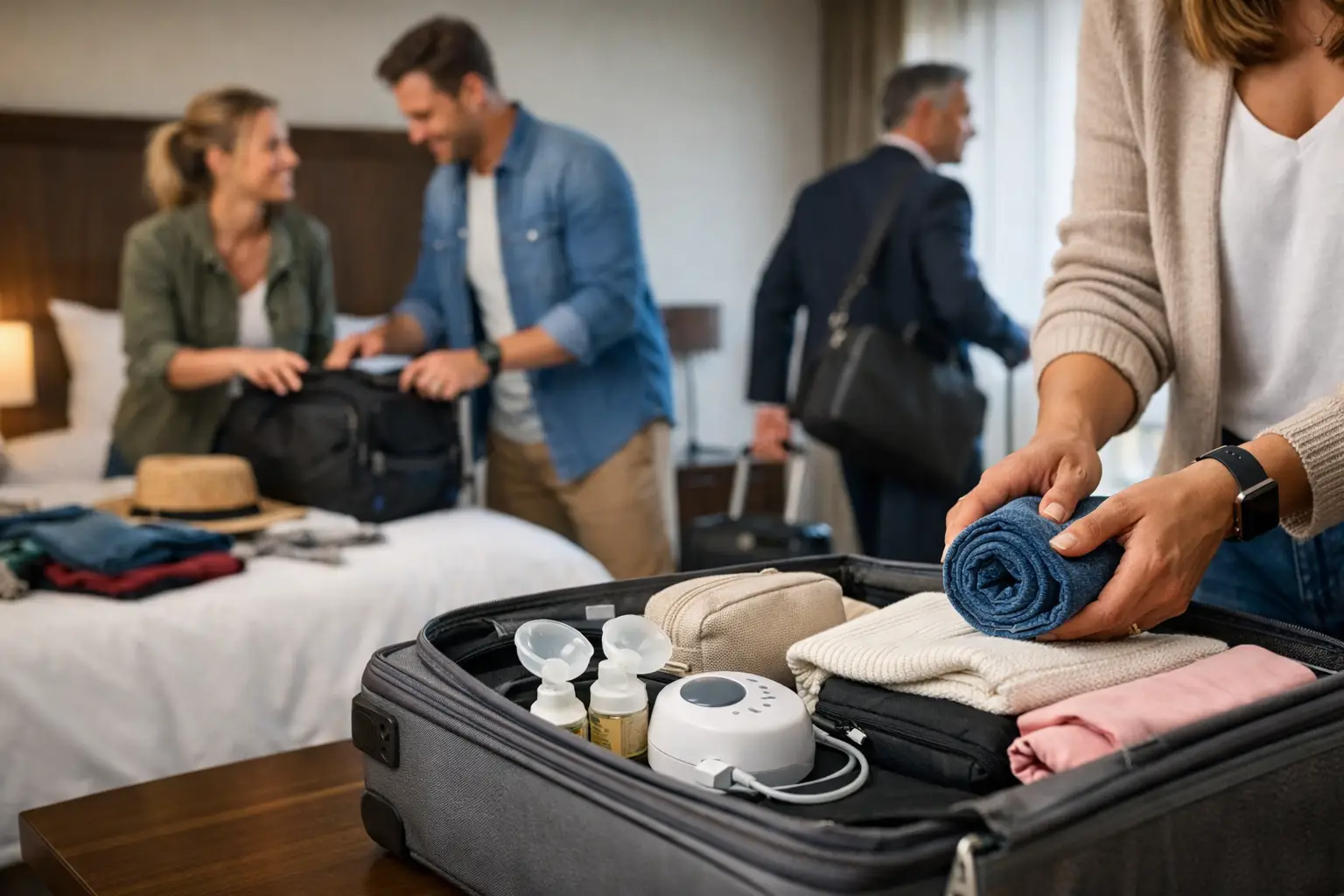
Are Travel Pumps TSA Approved for Carry-Ons?

A packed carry-on has very little patience for uncertainty. If your compression system includes a rechargeable electric pump, the natural question is: are travel pumps TSA approved? In most cases, a small cordless travel pump is permitted for air travel. The key is not an approval stamp on the pump itself, but how you pack its lithium battery and whether it meets standard airline safety rules.
For travelers who pack with intention, that distinction matters. A compact pump can create space for the extra knit, the second pair of shoes, or the items you would rather keep in your carry-on. Pack it correctly and it becomes one less thing to think about at security.
Are travel pumps TSA approved?
TSA does not typically publish a blanket statement that every individual travel pump is "approved." Instead, security rules focus on what the item contains. A cordless electric pump is generally allowed in carry-on luggage when it has a lithium-ion battery within permitted limits.
Most compact USB-rechargeable travel pumps use a small, built-in lithium-ion battery. These are usually well below the common 100 watt-hour threshold applied to consumer electronics. That makes them suitable for carry-on travel in the vast majority of cases.
The practical answer is simple: bring a compact rechargeable pump in your carry-on, protect it from accidental activation, and follow any airline-specific instructions. TSA officers always have final discretion at the checkpoint, so treat the guidance as a smart packing standard rather than a guarantee for every screening situation.
Why the carry-on is the better place for a cordless pump
Lithium batteries are the reason a travel pump deserves a deliberate place in your bag. Airlines prefer rechargeable devices and spare lithium batteries in the cabin because a battery issue can be identified and addressed more quickly there than in the cargo hold.
If your pump has a built-in battery, carry-on packing is usually the simplest choice. Put it in its pouch or another protective case, ideally near other electronics where it is easy to recognize if a screening agent asks about it. Keep the charging cable tidy and separate from loose metal objects that could press against the power button.
Checked luggage can be more complicated. Some airlines allow devices with installed batteries in checked bags, while others recommend or require that they remain in the cabin. Rules can change by carrier, route, and battery capacity. A carry-on removes much of that uncertainty and keeps your compression tool available when you need to repack before boarding or after arrival.
There is also a more elegant reason to keep it close: your packing system stays together. Your pump, clothing bags, cable, and pouch should feel like one compact kit, not a few small items scattered between suitcases.
Check the battery details before you fly
The battery rating is the one specification worth checking before any international trip or unfamiliar airline. Look for the watt-hour rating, often written as Wh, on the device, packaging, or product specifications. Batteries at or below 100Wh are commonly accepted in carry-on devices. Larger batteries may require airline approval, and very large batteries may not be permitted at all.
A typical mini compression pump is designed for travel and uses far less power than that limit. Still, do not guess if the label is missing or the device has been modified. Contact the airline before departure if you cannot confirm the battery capacity.
The same care applies to separate power banks. A power bank is considered a spare lithium battery, not simply an accessory. Keep it in your carry-on, cover exposed ports if needed, and avoid packing damaged, swollen, or overheating batteries. A premium travel setup should reduce friction, not introduce a preventable security delay.
Protect against accidental activation
A pump turning on inside your bag is unlikely to become a major issue, but it is easy to prevent. Switch it fully off before packing. If it has a travel lock, use it. Store it in its fitted pouch, and do not place heavy items where they can continuously press the control button.
This small step protects the device, preserves battery life, and makes your bag easier to inspect. It is functional logic with a polished finish.
Do compression bags create a TSA problem?
Compression bags for clothing do not change the core TSA rules for electronics or liquids. They can travel in a carry-on or checked suitcase, and they are useful for keeping garments contained, protected from moisture, and easier to organize.
What matters is what you place inside them. Clothing, soft layers, and fabric accessories are straightforward. Liquids, gels, creams, aerosols, and similar items still need to follow the carry-on liquid limit. Compression does not make a full-size bottle permissible at security.
There is one trade-off worth considering: highly compressed bags can make a dense section of luggage look less obvious on an X-ray image. That does not mean you should avoid using them. It simply means you should pack thoughtfully. Keep your pump, cables, toiletries, and other electronics accessible rather than buried under tightly compressed clothing. If an officer wants a closer look, you can open and repack without disrupting your entire suitcase.
A smarter airport-ready packing routine
The most useful system is one you can repeat without overthinking it. Compress your clothing at home, then place the pump in an accessible pocket of your personal item or carry-on. This lets you manage your packing volume while preserving easy access at security.
Before leaving for the airport, take four quick steps:
Charge the pump, then switch it completely off.
Confirm the battery is installed and undamaged.
Store the pump and cable in a protective pouch.
Keep liquids and larger electronics easy to reach if screening requires removal.
Once you arrive, the pump earns its place again. Use it to refresh your packing after a hotel change, create breathing room for a purchase, or restore order before the flight home. The goal is not to force every inch of your luggage into submission. It is to make room while keeping the suitcase calm, clean, and easy to live out of.
What about international flights?
For flights departing the United States, TSA rules guide the security checkpoint, but your airline's battery policy still applies. On international itineraries, the same broad lithium-battery principles are widely used, though enforcement and exact requirements can vary.
This is especially relevant on trips with multiple airlines or a connection in another country. Check the policy of the operating airline, not only the airline that sold the ticket. If a regional carrier has stricter requirements, its rules can shape how you pack the device for that leg of the journey.
Keep the pump charged enough for use, but there is no need to travel with it at maximum charge if you will not need it immediately. A partially charged device can be a sensible choice for long travel days, provided it has enough power for your planned repacking.
When a travel pump may cause trouble
The compact pump itself is rarely the issue. Problems are more likely when a traveler brings a damaged battery, an unmarked high-capacity device, loose spare batteries in checked luggage, or a pump that cannot be switched off. A battery that is swollen, cracked, leaking, unusually hot, or otherwise compromised should not be taken on a flight.
Manual compression options avoid battery questions altogether, but they ask more from you at the exact moment you are trying to finish packing. A cordless pump offers a better balance for frequent travelers: quick compression, no hunt for an outlet, and no repetitive rolling or pressing. The trade-off is simply that you need to handle it like any other small rechargeable electronic.
The Tripum Duo Kit is designed around that rhythm, combining a USB-rechargeable pump with 18L clothing bags and a compact organizing pouch. It is the kind of system that belongs in a carry-on because it makes space without creating visual or logistical clutter.
The simple rule to remember
A small, USB-rechargeable travel pump can usually fly with you in your carry-on. Check the battery rating, turn the device off, protect it in a pouch, and let the airline's battery rules have the final word.
Then focus on the part of travel that deserves your attention: arriving with a suitcase that still feels composed, instead of one that has been negotiated shut.


Comments